
What is Physiotherapy?
Physiotherapy is a health profession that uses various forms of treatment to restore, maintain, and make the most of a patient’s mobility, function, and well-being. Physiotherapy helps through physical rehabilitation, injury prevention, education, and through the use of modalities.
When Should I See a Physical Therapist?
Individuals who are suffering from an injury, suffering from chronic pain, or post-surgery. A doctor may refer you to physiotherapy, but a referral is not required to seek treatment from a physiotherapist.
What do Physiotherapists Treat?
Physiotherapists primarily treat musculoskeletal injuries from trauma, repetitive strain, or from chronic illnesses. Physiotherapists can also treat the following, but are not limited to: lung disorders, neurological conditions, maintenance or post-surgery from cardiovascular conditions, and pelvic disorders.
What to expect at your first session:
Your initial session with your physiotherapist will involve obtaining background information in regards to your injury, and assessing your functional mobility and strength. You and your physiotherapist develop a treatment plan that can involve the use of various modalities, education, and exercises to help you reach your goals.
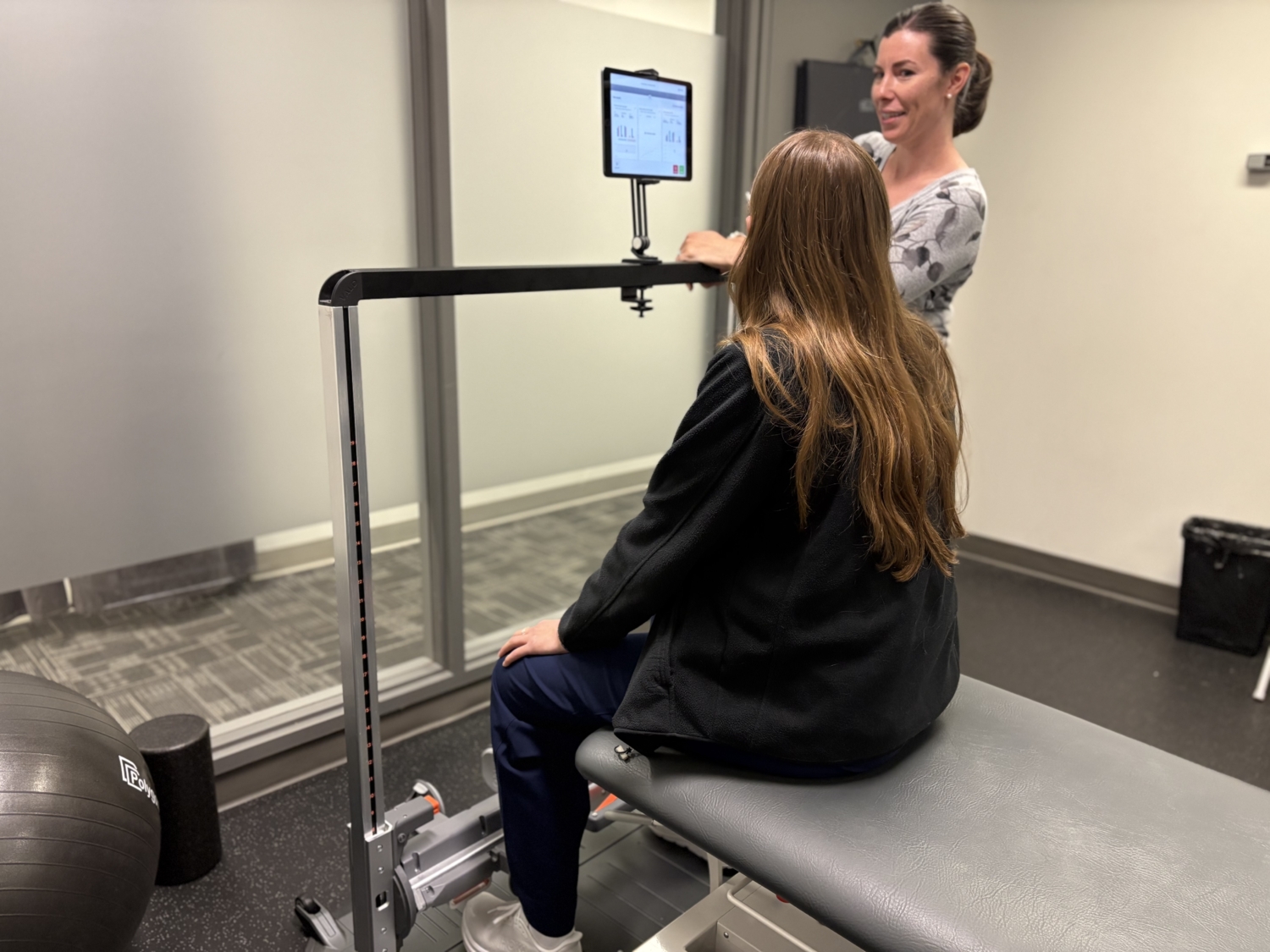
Recovery isn’t guesswork, and neither is performance. At Elite Sport Performance, we use VALD force plate and dynamometry technology to take the guesswork out of rehab and training. Whether you’re returning from surgery, working through an injury, or simply trying to build strength and stability, we can measure exactly where you stand and track your progress every step of the way.
How It Works
We use three complementary VALD systems to capture objective, side-by-side data on strength, power, and movement symmetry, things you can’t always see or feel on your own:
- ForceFrame for isometric strength testing across hips, knees, shoulders, and more, ideal for tracking strength gains and detecting side-to-side deficits.
- ForceDecks dual force plates for jump, landing, and movement analysis, giving us data on power output, control, and left-versus-right symmetry.
- Hand-held dynamometry for targeted, joint-specific strength testing, useful for smaller muscle groups or early-stage rehab.
Together, these tools give us hard numbers on strength, power, and symmetry, so we can spot imbalances, track deficits, and confirm when you’re truly ready for the next stage of rehab or return to sport.
Why It Matters for You
- Pre- and post-assessments. We establish where you’re starting from, whether that’s pre-surgery, post-injury, or at the start of a training block, then re-test at key milestones to show real, measurable progress.
- Return-to-sport planning. Testing parameters are tailored to your specific sport or activity, so clearance decisions are based on the demands you’ll actually face, not a generic checklist.
- Symmetry tracking. Side-to-side comparisons show us exactly where imbalances remain, so we know when strength and control are truly restored before clearing you for full activity.
- Personalized programming. Results guide your treatment plan, so time in the clinic is spent on what actually needs work.
- Motivation you can see. Nothing builds confidence in recovery like watching your own numbers improve over time.
Who This Is For
This isn’t just for elite athletes. It’s for anyone recovering from surgery, managing a chronic injury, or working to get stronger and more resilient, at any age or activity level.
Ask your Elite Sport Performance provider how force plate testing can be built into your care plan.

Cupping
What is Cupping?
Cupping is a therapy in which glass jars or cups are suctioned onto the skins surface with negative pressure. Traditionally, cupping has been used in Chinese medicine for 1000s of years to open up meridian pathways to allow Qi to flow through. When Qi flows freely throughout the body one enjoys good physical, mental and emotional wellbeing.
Cupping uses suction and negative pressure to drain excess fluids, stimulate the parasympathetic nervous system (relaxation) and increase blood flow to muscles and skin. It can be used along Meridians and acupuncture points to clear colds and flus and stimulate specific organs, it can also be used along fascial lines across the body to specifically treat fascia and muscles
Why treat fascia? Fascia is connective tissue (has an appearance like a spider web) that covers everything within our bodies – muscles, bone, nerve, organs etc. – it is the 3D glue that holds everything together. It is what allows our muscles to slide/glide efficiently. A fascial dysfunction can restrict range of motion, decrease blood flow to an area, and cause pain and toxin build up.
Cupping is different than most manual therapy in that the majority of other techniques use compression, whereas Cupping decompresses (lifts, separates and stretches) tissue to release adhesions and break down existing scar tissue, relax muscle spasms, and decrease trigger point pain. It has also been shown to decrease tissue changes (scar tissue formation) and inflammation following trauma.
What are the marks left by cupping?
- Marks can vary in pattern and color from red to dark purple
- Can last anywhere from 3 days to 2 weeks depending on health, activity level and severity of trauma to the area
- Marks are not bruises and are rarely sensitive to the touch
- They are static blood, lymph, cellular debris, pathogenic factors and toxins being released from deeper tissue layers
- Clearing this stagnation stimulates oxygenated blood to nourish and heal the targeted areas
- As the stagnation clears over a series of treatments the marks will lighten and eventually cupping will leave no marks at all.
Who can benefit from Cupping?
- Anyone with joint or muscle pain/tension, headaches, frequent colds or flu
- Ideal for those who are not getting the relief they need from regular massage therapy treatments
- Often can offer the results of a deep tissue massage with less discomfort.
- Very effective in treating chronic overuse injuries such as bursitis, tendonitis and other myofascial pain syndromes such as runner’s knee, tennis elbow, and low back pain.
Clinic Hours
Monday – Thursday 7am to 7pm
Friday – 7am to 5pm
Closed Saturdays & Sundays